
Posts Tagged ‘West Cambridge’
Why the “Longfellow” Bridge?
By Franklin Reece, 2015 In 1905, the magnificent Longfellow Bridge was nearing completion, even as the Cambridge Historical Society came to life. And today, 110 years later, the iconic bridge is being restored, just as the society enters an exciting new stage of life. The bridge was an engineering marvel. Designed to mimic the artistic…
Read MoreSelf-Guided Tour: Cambridge and the American Revolution
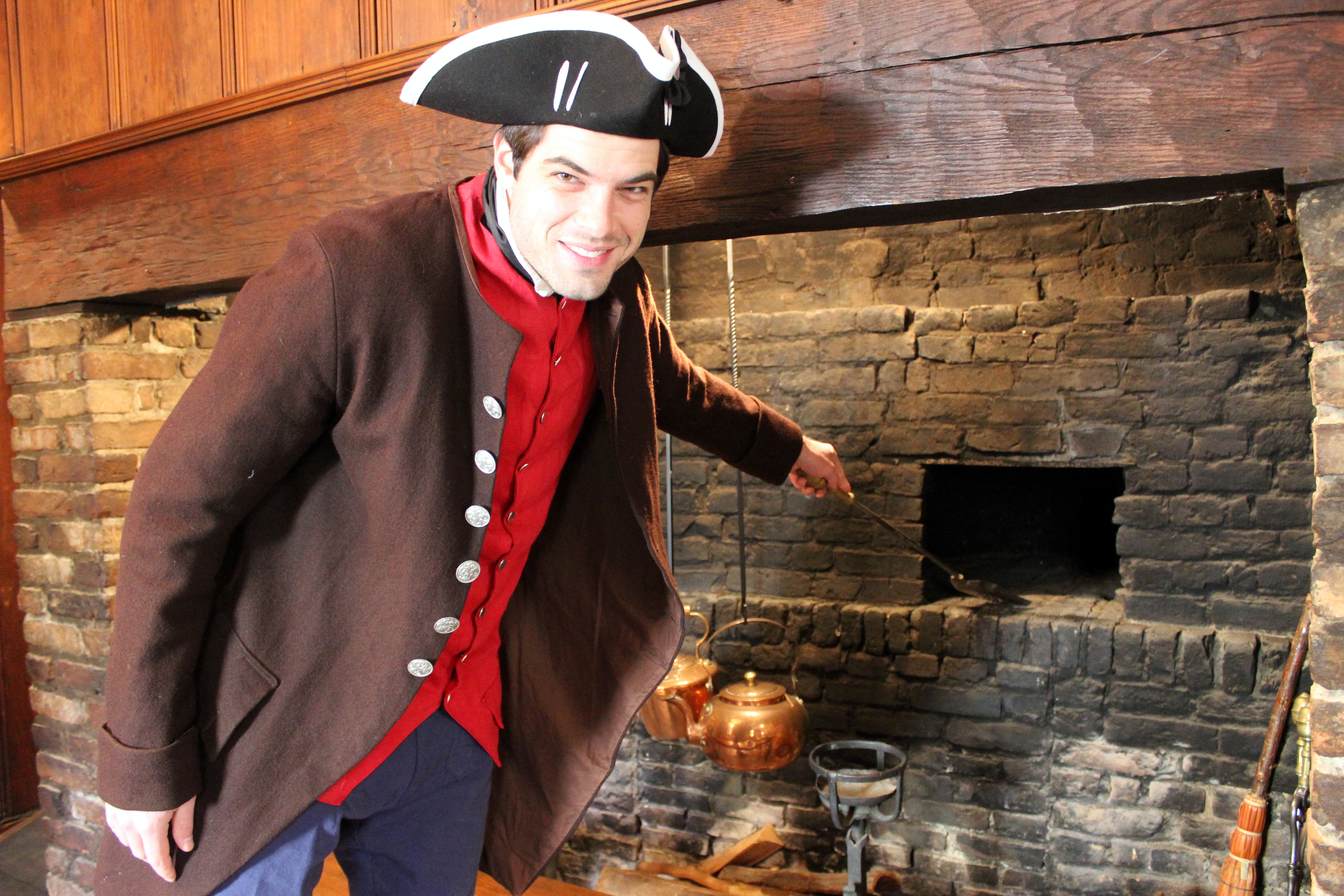
This tour hopes to shed light on the Revolutionary events that occurred in Cambridge. It is intended to personify its leaders, highlighting both their strengths and their humanity. It also hopes to take the viewer back to a time before the United States was born, before the Constitution was ratified, and before an American victory was assumed.
Read MoreLife in the Hooper-Lee-Nichols House: The Emerson and Dow Years
BY STERLING DOW This paper is from the Cambridge Historical Society Proceedings for the Years 1976-1979, Volume 44 A native of Portland, Maine, Sterling Dow received his undergraduate and graduate education at Harvard, where he taught Classics and the history of ancient Greece until his retirement as John E. Hudson Professor of Archaeology in 1970.…
Read More50 Years Later: Harvard’s 1969 Protests

In Cambridge, as in the rest of America, the late 1960s were a period of unrest and upheaval. As we consider our 2019 theme “How Does Cambridge Engage?” we benefit from looking back fifty years to the Spring of 1969. The events of April 8th-10th, 1969 were a response to the Vietnam War and the social…
Read MoreSelf-Guided Bike Tour: Pedaling the People’s Republic, A History of Political Activism in Cambridge
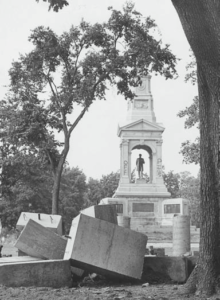
The city played a central role in the American Revolution and the abolitionist movement before being named “The People’s Republic” for its role in the anti-war, civil rights, tenant’s rights, gay rights, sustainable development, and environmental movements. Pedaling the People’s Republic will take participants on a tour of past political activity from the Revolution to the grass roots movements of the 20th century.
Read MoreThe History of 74 Rear Fayerweather Street, Cambridge
By Heli Meltsner, 2007 In the six decades after 1852 the use of this property changed utterly: an unused field became a garage, elementary school and finally a private residence. When William G. Stearns bought forty acres of the Ruggles-Fayerweather estate he hired the prolific local surveyor Alexander Wadsworth to lay out a residential subdivision.…
Read MoreMemories of the Huron Village
By Susan S. Poverman, April 2007 My family moved to Fayerweather Street in 1937 and, having no garage, arranged to keep our car in the Fayerweather Garage, which was on the property that became the Fayerweather Street School and is now the home of the Lander family. Someone picked up our car every evening and…
Read MoreThe Huron Avenue Area: Development of a Streetcar Suburb
By Charles M. Sullivan, 2007 Huron Avenue is one of the newest neighborhoods in Cambridge, but it is intimately connected with one of the oldest. It is the sole example of the classic 19th century streetcar suburb in Cambridge, and owes its existence to another neighborhood’s rejection of that mode of transportation. The development of…
Read MoreSelf-Guided Tour: Huron Village’s Modern Houses
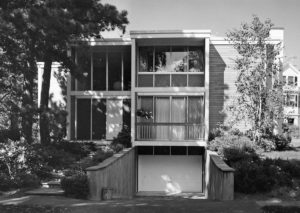
Although Huron Village is dominated by houses dating from after the Civil War to the first quarter of the twentieth century, it is actually well furnished with what are still called “modern houses.” We say “Modern,” although the four following examples were built nearly a half century to three quarters of a century ago. Three were built as the architect’s own house or for his parents, a time-tested method of introducing a difficult new style into a neighborhood.
Read MoreThe History of Garden Street
By Lois Lilley Howe Read April 25, 1949 This article originally appeared in the Cambridge Historical Society Proceedings, Volume 33, pages 37-57 WE CANNOT think of Old Garden Street without thinking of the Common which forms one side of it. Yet our thought of the Common is just of a big open space with trees and a…
Read More