Posts Tagged ‘Black history’
All About Pauline Elizabeth Hopkins
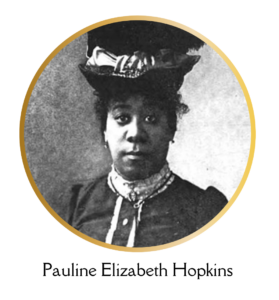
Biography of Pauline Elizabeth Hopkins (1859-1930) Courtesy of Ira Dworkin, Department of English, Texas A&M University Pauline Elizabeth Hopkins, who was born in Portland, Maine, in 1859, is best known for four novels and numerous short stories which she published between 1900 and 1903. Her best-known work, the novel Contending Forces: A Romance Illustrative of Negro…
Read MoreOctober 17: Beyond Her Time: The Visionary Works of Pauline Hopkins
About the event Thursday, October 17Cambridge Public Library Main Branch, 449 Broadway6 pmFree Join us for a captivating exploration of the life and literary legacy of Pauline Elizabeth Hopkins. A pioneering figure of her time, Hopkins was a novelist, journalist, playwright, and activist who fearlessly tackled issues of race, gender, and social justice. This lecture…
Read MoreOct 30 + Nov 12: Virtual book group discussions of Contending Forces
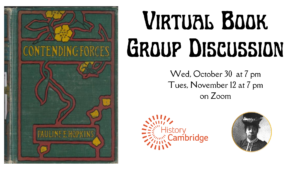
Details Wed, Oct 30 at 7 pmTues, Nov 12 at 7pmFreeOn Zoom A pioneering figure of her time, Pauline Hopkins was a novelist, journalist, playwright, and activist who fearlessly tackled issues of race, gender, and social justice. Join us for a virtual discussion of her 1900 novel Contending Forces (available through the Cambridge Public Library).…
Read MoreJune 16: Juneteenth Gathering at Longfellow House
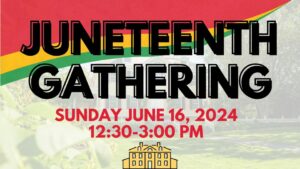
Gather for Juneteenth to honor the lives and legacies of those who endured slavery and seized freedom on Brattle Street and beyond. This free event will feature a community gathering with Juneteenth #Pop-Up Poetry, A Denise Plays Hard Event; speeches by living descendants, music; all-ages activities; and refreshments. Free and open to all. Rain location:…
Read MoreWatershed: An Excursion in Four Parts

by Emily HiestandFirst published by The Georgia Review and Beacon Press in 1998. Updated slightly in 2021 for publication in This Impermanent Earth, and in 2024 for History Cambridge. Part One | Street Like travelers who want to keep some favorite place from being overly discovered, the residents of our neighborhood sometimes confide to one another in a near-whisper, “There’s no…
Read MoreLGBTQ+ History Hub
This hub is a work in progress. Have some resources to add? Let us know! In This Hub Introduction Cambridge is a well-known leader in LGBTQ+ rights. The city was first in Massachusetts to perform gender-affirming surgery in 1972, and in 2004 it became first in the country to grant same-sex marriage licenses. City government…
Read MoreBlack History in Action’s Spring Event Series

BHAC’s spring event series is here! Don’t miss events in April and May at St. Augustine’s African Orthodox Church at 137 Allston Street. History Cambridge is pleased to be a co-sponsor of these events. Sunday, April 21 from 4-6 pm Black Cambridgeport to the Future Exhibition Opening Explore the vibrant living history of Cambridgeport’s Black community…
Read MoreIf you have a New Year’s resolution to research local history, History Cambridge can be of help
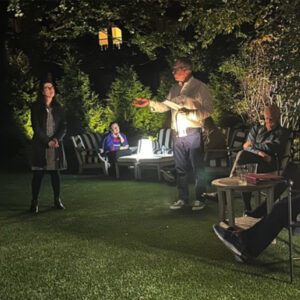
Whatever your interest or motivation about the past, History Cambridge can help you find the resources to conduct your own local history research.
Read MoreReclaiming William Wells Brown, an abolitionist, lecturer, author and doctor with Cambridge ties
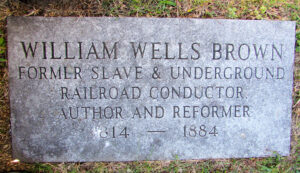
Abolitionist William Wells Brown traveled in the 1800s in support of an immediate end to enslavement and for equal rights for Black Americans brought him around the country, across the Atlantic and ultimately to Cambridge.
Read MoreSat, August 19 Guided Tour: Community Resiliency and Activism in Cambridgeport Option 2
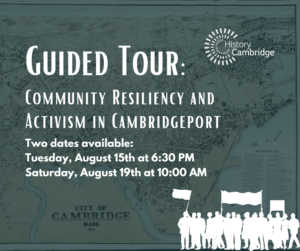
On August 15 and 19, History Cambridge intern Miranda Santiago led two sessions of a tour she created on Community Resiliency and Activism in Cambridgeport. Born and raised in Cambridge, Miranda is now a student at New York University, but her experiences growing up in Cambridge – in particular the time she has spent in…
Read More