Posts Tagged ‘West Cambridge’
Self-Guided Tour: The Work of Revolution in Cambridge
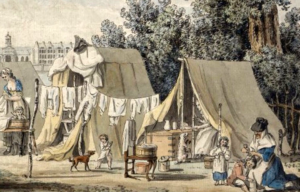
Introduction For many, the first image that comes to mind when thinking of Cambridge during the Revolutionary Era is that of General George Washington taking command of the Continental Army on Cambridge Common in July of 1775, under what would come to be known as the Washington Elm. Although we now know that this tale…
Read MoreCambridge’s Caribbean connection runs deep
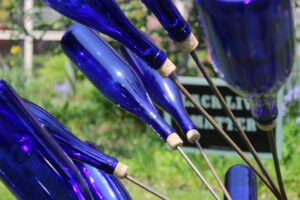
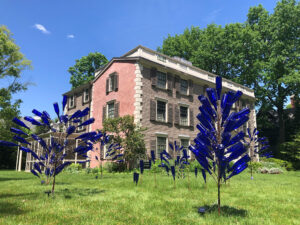
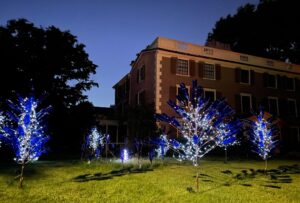
“Forgotten Souls of Tory Row: Remembering the Enslaved People of Brattle Street,” the installation of bottle trees now on view at the History Cambridge headquarters (159 Brattle St.), was inspired by a custom that originated in Congo in West Africa long ago. The tradition of bottle trees was brought to the Caribbean and the Southern United States by enslaved people and passed down through generations. While bottle trees signify different things to different people, there is agreement that the bottles are placed on tree branches to destroy evil spirits and to capture the energy, spirit and memories of ancestors.
Read More‘Forgotten Souls of Tory Row’ art installation remembers enslaved people of Brattle Street
Cambridge and slavery are not often paired in the public imagination. Most think of the enslavement of people of African descent as a Southern phenomenon from which the North, particularly New England, was exempt. But slavery was a very real, ever-present institution in Northern colonies and, later, states – including Massachusetts. Recent efforts by academic and public historians to emphasize the role slavery played in the Cambridge area include the re-centering of Medford’s Royall House and Slave Quarters to focus on the experiences of enslaved people on that estate, as well as Harvard University’s recent release of the “Harvard and the Legacy of Slavery” report. History Cambridge has also been engaged in this important work through our research and public programs, including our Tory Row Antiracism Coalition
Read MoreCambridge Center for Adult Education

Cambridge Center for Adult Education is a non-profit organization providing a wide range of high-quality, low-cost educational experiences in Cambridge, Boston, and surrounding area since 1870. Contact CCAE via email or at 617-547-6789
Read MoreA Brief History of “Ten Ten”
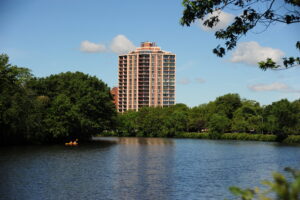
By Elizabeth af Jochnick Before Ten Ten was Ten Ten, it was an in-patient infirmary for Harvard students, located next to Mount Auburn Hospital, known as the Stillman Infirmatory. When the University moved its student health facilities to Harvard Square, they put the Infirmary up for sale. Harvard offered to sell the building and the…
Read MoreA Lost Park: Longfellow’s Parklands
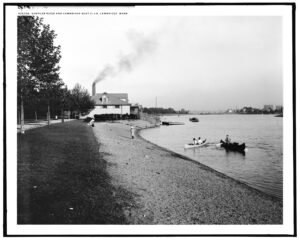
By Annette LaMond | S.M., MIT Sloan School of Management | Ph.D., Yale University There are various lenses through which to view the history of a city, and the treatment of open space and development of parks may be as revealing as any other. This is particularly true in Cambridge – one of the most…
Read More1986 Neighborhood Trivia Hunt
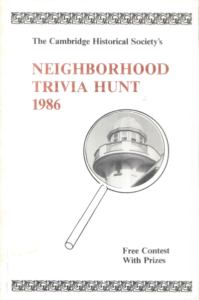
Cambridge has certainly changed over time, and our 1986 trivia hunt shows just how true that is. It serves as a kind of time capsule of our city. Take a trip back in time with this self-guided tour to see how many of these sites are still around. Which ones do you recognize? Which ones…
Read MoreSelf-Guided Tour: Stories from the Early African American Community of Old Cambridge
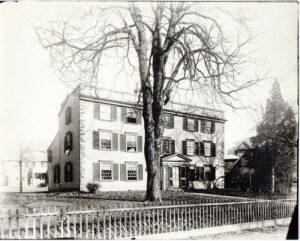
By Jules Long, Longfellow House – Washington’s Headquarters National Historic Site, 2018 | Edited by Eshe Sherley, History Cambridge, 2021 Slavery in Pre-Revolutionary Cambridge The oldest existing mention of slavery in Massachusetts was recorded in 1638, when African prisoners arrived in the colony on the slave ship Desire, built in Marblehead the previous year. In…
Read MoreEarly Black Cambridge Resource Hub
Are you interested in learning more about the history of race, slavery, and African American life in the Cambridge area? This guide highlights many of the resources available that touch on these topics, including primary, secondary, and public-facing sources (such as self-guided tours and websites). While this hub is focused on material related to the 1700s, it also offers relevant material from later periods in Cambridge history.
Read MoreAnnette LaMond: Economist Turned History Enthusiast

Cambridge resident and CHS volunteer Annette LaMond has provided us with A History Reclaimed: The Society for the Protection of Native Plants and the Cambridge Plant Club, an in-depth, illustrated history of the two organizations that takes us back to their late 19th century origins. “This history of the Society for the Protection of Native Plants grew out of my…
Read More