
|
 |
Commercial Varnish
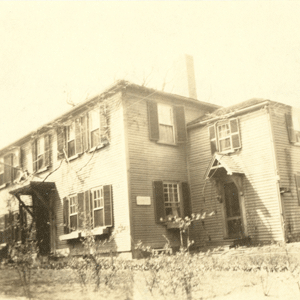
54 Brattle Street |
The Valspar Corporation, maker of some of the most well-known paints and varnishes on the shelves of home improvement stores today, was not founded in Cambridge. However, the origins of Valspar are from Boston and the innovation that ultimately made Valspar a successful company is from Cambridge.
Varnish, by definition, is a coating which dries to form a protective, yet transparent film, generally used for wood products. It is a product which has been around for centuries. The term originates from the name of Berenice, who was Queen of Cyrene and wife of the King of Egypt, Ptolemy Euergetes, around 250 B.C. Her legend holds that Berenice sacrificed her beautiful hair to Venus as an offering for her husband’s safe return from war. The beauty of her hair became associated with the beauty of amber to the Greeks, which is the basis of the Latin vernix, which then became vernice, in Italian, which is the derivative of the English word varnish. Early varnishes were made from linseed oils, gums, egg yolks, and many other things, and often did leave an amber-colored residue when they dried.
In 1806, Samuel Tuck opened a paint store on Broad Street in Boston, Mass which he named Paint and Color. Around the same time, two businessmen from Cambridge, Franklin Houghton and David McClure, were experimenting with ways to produce a reliable varnish. When they had created a good formula, they focused on commercializing and selling their product, instead of remaining small-time neighborhood dealers. They were so good at selling the merit of their wares, that Houghton and McClure’s personal varnish formula is the same basic formula still used today.
Houghton and McClure’s shop was at first the back part of Dexter Pratt’s blacksmith shop near Mount Auburn Street. By 1820 the pair were commercially producing varnishes for the first time in the United States. They eventually opened a bigger shop, closer to Boston, and never had trouble finding customers. By 1827 both had retired, quite possibly from the health problems they acquired due to inhaling the fumes in their shop.
Without Houghton or McClure, their business stalled for a few years, but was essentially picked up in stride in 1832 when Lawson Valentine opened Valentine and Company. He used the Houghton & McClure formula and expanded what they had started. In the meantime Samuel Tuck’s Boston Paint and Color had been acquired by Augustine Stimson. Around 1852 the Valentine and Company merged with the former Paint and Color, to create Stimson & Valentine, a company focused on varnish, but also selling paints, oils, glass, and beeswax. This merger was the cornerstone of the future Valspar Corporation.
The new business enterprise did not remain in Cambridge, changing hands among family members a few times, and moving to New York City in 1870. It was not until the early 20th century, however, that the mid-size varnish company formed from the work of two original Cambridge men became the varnish giant it is today. In 1903, Lawson Valentine’s grandson, L. Valentine Pulsifer, a Harvard-educated chemist joined the company. It took him only three years to develop a revolutionary product, which he named Valspar. In 1906, Pulsifer unveiled a new kind of varnish which was the first coating for wood that retained its clear finish when exposed to water. Varnish super-stardom was achieved and the company has never looked back, changing their name to match their biggest product, and marketing that product for the next 100 years. Today, with more than two centuries of experience, Valspar is the world's sixth largest manufacturer of paints and coatings. Now headquartered in Minneapolis, Minnesota, its origins date back to the early days of a paint and color shop in Boston, and two men making varnish in the back of a blacksmith shop in Cambridge.
Sources:
Glass, Paints, Varnishes, and Brushes: Their Manufacture, History, and Use. Pittsburgh: Pittsburgh Plate Glass Company, 1923.
Sources:
Glass, Paints, Varnishes, and Brushes: Their Manufacture, History, and Use. Pittsburgh: Pittsburgh Plate Glass Company, 1923.
http://arts.jrank.org/pages/9948/Varnish.html
http://valsparglobal.com/about/ourhistory.jsp
http://www.fundinguniverse.com/company-histories/The-Valspar-Corporation-Company-History.html
http://en.wikipedia.org/wiki/Valspar
http://www.timepassagesnostalgia.com/&searchkeywords=1820+two+businessmen+cambridge+massachusett+
began+first+
commercial+production+varnishe+united+state&sis=-1&rdir=1
http://www.ebooksread.com/authors-eng/george-l-gould/historical-sketch-of-the-paint-oil-varnish-and-allied-trades-
of-boston--
since-ala/page-7-historical-sketch-of-the-paint-oil-varnish-and-allied-trades-of-boston--since-ala.shtml

|
